2 Min ReadBy Evan James
Meet Studio Verb: Fender Studio Pro 8’s Creative Reverb Powerhouse
From lush cinematic spaces to warped tape-stop transitions, Studio Verb combines polished reverb processing with powerful creative controls that transform ambience into part of the performance.
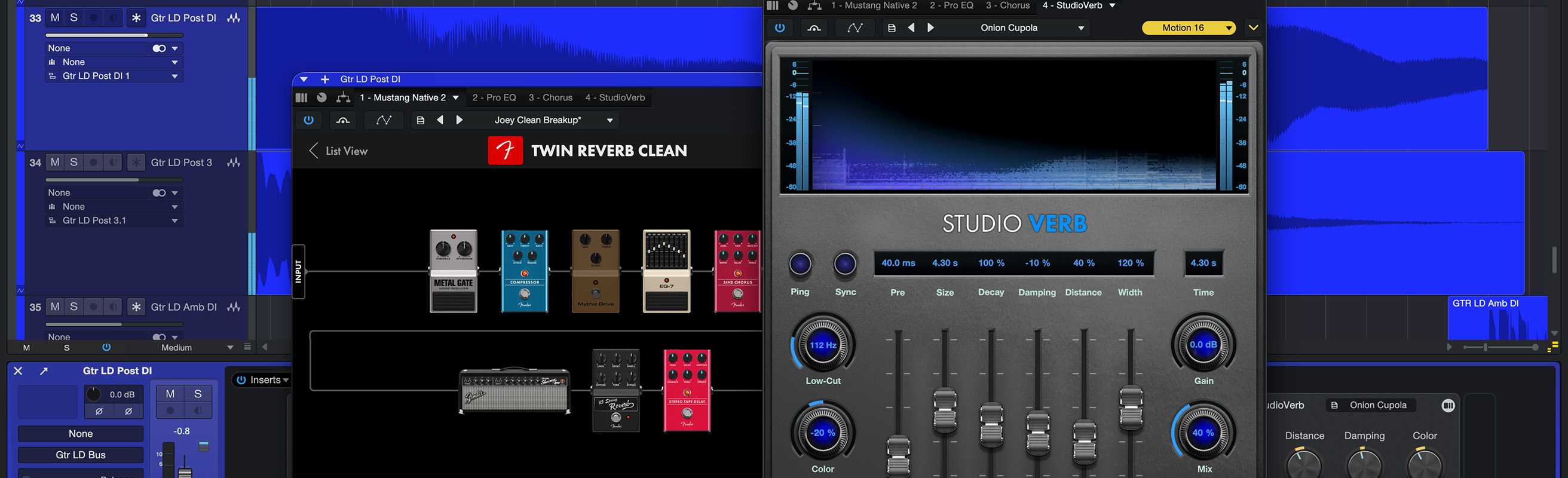
Meet Studio Verb: Fender Studio Pro 8’s Creative Reverb Powerhouse
Reverb adds depth, dimension, and atmosphere by simulating the reflections of physical spaces—from tight rooms to towering concert halls. A little can make a track feel bigger and more alive, but too much can wash your mix into oblivion like a cassette left out in the rain.
The best reverbs sit right in the middle—spacious, musical, and controlled—and that’s exactly what makes the new Studio Verb in Fender Studio Pro 8 so exciting.
Studio Verb is a brand-new algorithmic reverb built for modern production workflows, combining polished spatial processing with creative sound design tools that go far beyond traditional room and hall sounds. Whether you’re widening drums, giving vocals cinematic depth, or building warped transition effects, Studio Verb feels less like a utility plugin and more like a creative instrument hiding in your effects rack.
Bigger Spaces Without the Mud
One of the first things you’ll notice about Studio Verb is how easily it creates width and depth without clouding up your mix.
On drums, controls like Color and Low Cut help shape the tonality of the reverb so your transients stay punchy while the ambience stays smooth and controlled. Instead of smearing everything together, Studio Verb adds dimension while preserving clarity.
That same balance makes it especially powerful on vocals. Shorter Decay settings can create the tight, explosive ambience heard across countless classic records, while longer settings open up huge atmospheric spaces for modern pop, ambient production, and cinematic sound design.
Why Pre-delay Matters
One of Studio Verb’s most powerful features is its tempo-syncable Pre-delay control.
Pre-delay determines how long it takes before the reverb kicks in after the original sound, and that tiny gap makes a massive difference, especially in dense mixes. Vocals stay intelligible. Synths retain their attack. Guitars breathe instead of blending into a wall of haze.
And because Studio Verb can sync directly to the musical grid, reverbs can move rhythmically with the groove of a track instead of fighting against it.
Don’t miss out!
Be the first to know about new products, featured content, exclusive offers and giveaways.
Reverb Meets Sound Design
Studio Verb also gets wonderfully weird. Its Size parameter stretches all the way up to 60 seconds, allowing for massive ambient textures and evolving spatial effects. But the real magic happens when Size is adjusted while audio is actively passing through the plugin. Because the parameter interacts with pitch behavior during modulation, automating Size creates dramatic pitch-shifting effects reminiscent of classic tape-stop transitions.
With a little automation, Studio Verb can become a tape-stop effect, a pitch-diving transition tool, an ambient texture generator, or a warped sound design machine.
Faster Dialing with Ping
Another standout feature is Ping, which sends a full-frequency impulse through the reverb so users can hear and fine-tune the space itself without constantly looping audio. It’s a deceptively powerful workflow tool that makes dialing in reverbs faster, more precise, and far more intuitive, especially when paired with hardware controllers.
More Than Just Ambience
At its core, Studio Verb delivers the lush, polished sound you’d expect from a flagship reverb, but what makes it truly exciting is how quickly it evolves from a traditional mixing tool into a creative playground capable of tightening a mix, widening a chorus, or melting an entire track into slow-motion. Studio Verb doesn’t just place sounds in a space, it turns space into part of the performance.


